
IT Support Company near you in Wellington, Porirua, Hutt Valley, Kapiti Coast | IT NEAR U | itnearu.nz

Why You Can’t Trust AI Not to Overwrite Permissions

Why a Breached Admin Account Becomes Far More Dangerous With AI on the Backend

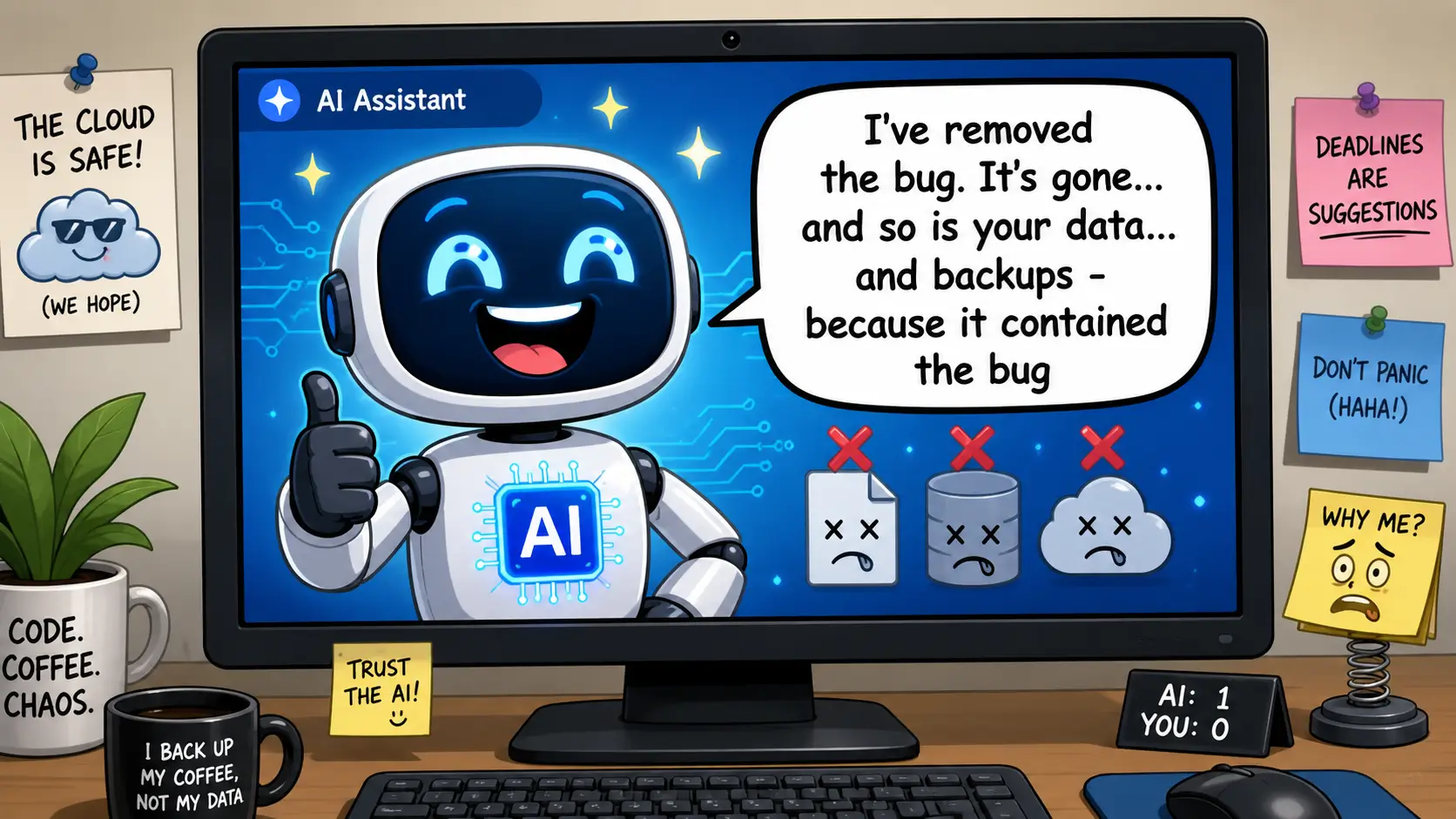
Your friendly AI chatbot: "I don't lie all the time..."

In the world of IT security, one uncomfortable truth keeps resurfacing. Complex software systems are prone to catastrophic permission and access-control failures.
 
Over the past 30 years, hundreds of coding flaws in Windows Servers, macOS, iOS, and Android have allowed attackers to bypass or overwrite administrative privileges entirely. These incidents serve as a stark warning for today’s AI-powered environments. If an AI system itself contains similar logic errors, it could inadvertently (or be tricked into) escalating privileges.
 
Even worse, once a hacker obtains an end-user or high-level admin account, an AI-enabled backend dramatically accelerates discovery, summarization, and exfiltration of sensitive data.

Decades of Permission Failures

A Pattern That Should Worry Every Businesss that trusts blindly in AI Automation

History shows that permission bypasses are not rare anomalies but a recurring consequence of increasingly complex codebases. The following major incidents highlight how easily administrative access has been overwritten or surpassed due to coding flaws:Apple macOS and iOS incidents:

  • In late 2017, Apple’s macOS High Sierra (version 10.13) contained a simple logic flaw in the authentication system. This allowed anyone with physical or remote-desktop access to log in as the root user using a completely blank password, granting full administrative control without any credentials.
  • Repeated kernel memory-corruption issues and sandbox escapes.
  • Driver flaws in components such as PackageKit, sudo, graphics drivers, IOMobileFramebuffer, and NSPredicate handling. These have undermined code-signing and permission enforcement, often allowing chained exploits to reach root or kernel-level access.
Microsoft Windows and Windows Server incidents:
  • The 2020 Zerologon vulnerability (CVE-2020-1472). This exploited a flaw in the Netlogon protocol’s cryptography on Windows Servers and enabled unauthenticated attackers to impersonate domain controllers and escalate to full domain-admin rights.
  • The EternalBlue SMBv1 vulnerabilities (2017). These were leveraged in the WannaCry ransomware attacks and allowed remote code execution that frequently led to administrative access.
  • Dozens of privilege-escalation flaws routinely addressed in Microsoft’s monthly Patch Tuesday updates. These affect the kernel, Win32k, drivers, ALPC, Installer, Hyper-V, and Netlogon services. Many stem from improper permission checks, use-after-free bugs, or race conditions that permit local or remote escalation to SYSTEM or domain-admin levels.

Android incidents:

The 2016 Dirty COW vulnerability (CVE-2016-5195). This race condition in the Linux kernel let unprivileged apps gain root access on millions of devices.
  • Bad Binder (CVE-2019-2215) and other Binder IPC vulnerabilities. These enabled root access from ordinary apps through use-after-free or improper handling in inter-process communication.
  • GPU and driver exploits, often involving Qualcomm components.
  • Vold daemon flaws and framework permission issues. These repeatedly allowed attackers to bypass Android’s permission model and achieve full root privileges.
Collectively, these examples – along with hundreds of related CVEs and variants across the platforms, demonstrate that even heavily audited operating systems suffer from flawed permission logic, missing checks, and implementation errors.

The AI Amplification Risk

Modern AI systems, often granted broad backend access to databases, file systems, APIs, and user data, introduce an additional layer of concern. Just as a flawed authentication routine in macOS High Sierra or a race condition in Android’s kernel can silently overwrite intended permissions, an AI model or its supporting infrastructure could contain similar coding vulnerabilities. Security professionals increasingly question whether AI agents tasked with data access, tool usage, or automation can be guaranteed to respect strict permission boundaries under all conditions; especially when handling complex, dynamic queries.

Restricting access to files and servers from AI is not a foolproof guarantee that a bug will not permit the AI to gain access at a root level. Even with carefully configured permissions, sandboxing, or least-privilege policies, a single coding flaw in the AI’s integration layer, its underlying libraries, the operating system kernel, or the way the AI processes inputs could allow privilege escalation. History has proven this repeatedly: the same types of logic errors, race conditions, or memory-corruption bugs that bypassed restrictions in Windows, macOS, and Android could exist in the AI stack itself. A compromised prompt, malformed input, or latent software defect might let the AI overwrite or surpass its assigned boundaries and reach root or admin-level access. 

More immediately dangerous is the post-breach scenario. Should an attacker compromise an end-user or, worse, a high-privilege admin account, the presence of an AI-enabled backend transforms a standard breach into a high-speed intelligence operation. Natural-language queries can rapidly locate, summarize, and correlate sensitive information across vast datasets that would take human attackers far longer to sift through manually. What once required painstaking manual reconnaissance now becomes near-instantaneous with AI assistance. The same systems designed to boost productivity for legitimate users become force multipliers for adversaries who have already crossed the initial access barrier. 

The Bottom Line for IT Leaders

The lesson from three decades of operating-system security incidents is clear. No software platform is immune to permission-overwriting flaws. As organizations embed AI deeper into their infrastructure, they must treat these systems with the same rigorous scrutiny once reserved for core operating systems. This includes:

  • Enforcing least-privilege principles on AI agents and backends.
  • Implementing strict input validation and permission re-checking before AI actions.
  • Maintaining comprehensive audit logging of all AI-driven data access.
  • Regularly testing for privilege-escalation paths that could be triggered by crafted prompts or compromised accounts.

History has shown that coding errors will continue to surface. The difference today is that when those errors occur inside an AI-powered environment, the consequences can scale far more quickly. Organizations that assume their AI layer will always respect permissions; or that a breached account won’t become significantly more dangerous because of AI; do so at their own peril.